


Is the United States Still a Democracy?


The answer to this question technically is yes, BUT, it is more complex than a simple answer of yes or no. Perhaps a better question might be: “What type of democracy is the United States”? What do I mean by that?
Many of us have been taught that the United States is a “representative democracy”, we elect officials to make decisions on our behalf. Democracies often feature free elections, freedom of speech, and checks and balances among branches of government.
While the United States is often described as a democracy, the structure of its government is more nuanced than the simple label suggests. As a federal constitutional republic, the US operates, ideologically anyway, under a complex system of checks and balances designed to limit the concentration of power and protect individual liberties. From its founding in the 18th century to the present day, America’s governmental form has evolved but its core principles remain firmly rooted in representative rule, federalism, and constitutional law. Each term in that phrase carries specific meaning:
Federal: Power is divided between a national (federal) government and individual state governments.
Constitutional: The government's authority and structure are defined and limited by a written constitution.
Republic: Citizens elect representatives to make decisions and pass laws on their behalf.
An Imperfect Democracy from the beginning
The United States has been an imperfect Democracy from the beginning when the founders wrote the Constitution. They understood and realized that changes (amendments) would need to be made as situations arise that would enhance the basic tenants of the Constitution and they addressed and allowed for that in the document when they wrote, (…..In order to form a more perfect union) in the preamble. Further, they wrote into it, the ability to make changes via amendments. In fact, the United States has been several different categories of democracy in our nearly 250-year existence. Here are the different categories of democracy our country has evolved in and out of during our history as a nation.
Confederation (1781-1789)
There was a period between the end of the Revolutionary War in 1781 and the Constitution being ratified by the 13 colonies in1789 when the United States operated under articles of Confederation. Thus, the United Staes was a Confederation.
(A confederation (also known as a confederacy or league) is a union of sovereign states, united for purposes of common action often in relation to other states. Usually created by a treaty, confederations of states are usually established for dealing with critical issues, such as defense, foreign relations, internal trade or currency, with the general government being required to provide support for all its members. Confederation represents a main form of inter-governmental-ism, this being defined as "any form of interaction between states which takes place on the basis of sovereign independence or government." Confederation is almost as a federation with the federal government being as a combination or alliance of all the states.)
A democracy yes, but a different category of democracy.
Census Democracy (1789-1964)
From 1789 to 1964 (when the civil rights bill was enacted) the United States was categorized as a Census Democracy, (It is the suffrage in which the right to vote is restricted to only a part of the population, being in many cases wealthy class. This was the case in almost all existing democracies of the 18th and 19th centuries, although in the latter the right to vote was given to the working class and the lower middle class in countries like Great Britain, later in the 20th century the universal suffrage with the advent of voting rights for all people of the age of majority.)
A democracy yes, but a different category of democracy.
Representative Democracy (1964- approx 1990)
There has been much discussion about when the United States began to deteriorate from a representative Democracy into something not so well defined. The prevailing timeframe seems to be around 1990 with some discussion placing that event to 1980 during the Reagan era. What ever timeframe is closer to the truth, something startling has happened to Democracy in the United States since that time. The United States is no longer classified as purely representative democracy.
A New Classification of Democracy
The Economist Intelligence Unit, (EIU) is a research and analysis business owned by the publisher of The Economist. economist intelligence unit democracy index 2026 - Search has for the tenth consecutive year, classified the United States a “flawed democracy”. Logically the next question is, what is a Flawed Democracy? definition of a flawed democracy - Search
A flawed democracy is a political system that maintains basic democratic features like free elections and civil liberties but suffers from significant weaknesses in governance, political culture, or civil rights.
Core Definition
A flawed democracy (also called a defective democracy) is a system where fundamental democratic elements exist—such as regular, free, and fair elections, universal suffrage, and basic civil liberties—but other aspects of democracy are weak or compromised, preventing the system from fully realizing democratic ideals. These weaknesses can include limitations on media freedom, minor suppression of political opposition, corruption, or ineffective government functioning.
Key Characteristics
Electoral Integrity: Elections occur regularly and are generally free, but may face issues like restricted voter access, unfair campaign practices, or lack of transparency in vote counting.
Civil Liberties: Basic freedoms such as speech, assembly, and press are recognized but may be partially restricted, limiting public discourse and dissent.
Government Functioning: Deficiencies may include corruption, weak accountability, poor checks and balances, and low institutional effectiveness.
Political Participation: Citizens may have limited engagement beyond voting, with few opportunities to influence policy between elections.
Political Culture: Democratic norms may be weak, leading to polarization, populist pressures, or diminished public trust in institutions.
Forms of Flawed Democracy
Political scientists identify several types of defective democracies, which include:
Exclusive Democracies: Certain groups have fewer rights or are excluded from full participation.
Domain Democracies: Non-democratic actors, such as the military or corporations, exert veto power over elected officials.
Illiberal Democracies: Civil liberties and rule of law are weak despite elections.
Delegative Democracies: Leaders dominate institutions with limited accountability.
Causes
Flawed democracies can arise due to historical, social, or economic factors, including:
Path and level of modernization
Economic trends and social capital
Weak civil society or political institutions
Regional influences and geopolitical pressures
CONCLUSION
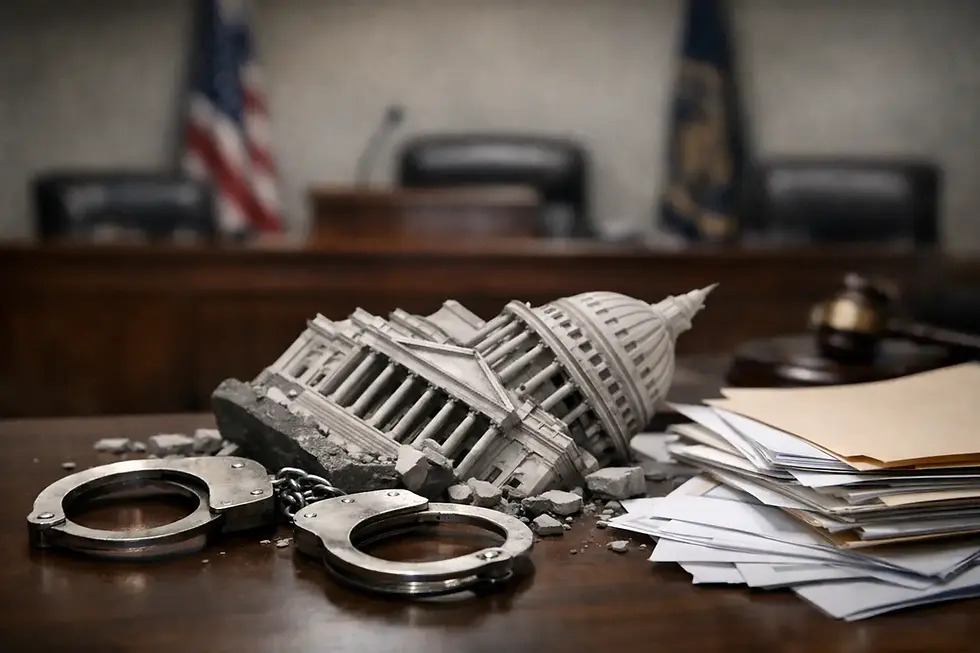
The United States is often cited as a contemporary example of a flawed democracy. While it maintains free and fair elections and high political participation, it faces challenges such as political polarization, executive aggrandizement, gerrymandering, and systemic inequalities, which weaken democratic functioning and public trust.
In summary, a flawed democracy is a system that retains the formal structures of democracy but exhibits significant shortcomings in governance, civil liberties, or political culture, preventing it from achieving the full promise of democratic rule.
I think it is easy to see how we as a nation have reached this place in our society and why the EIU classification is justified. Just look at the Key Characteristics and Forms of Flawed Democracies above again.
So, to answer the question: Is the United States still a Democracy? I will use a response from a movie about a little girl asking the question is Santa Claus real;
Yes Virginia, the United States is still a Democracy, BUT….
I’m R. Simon Kent and this is My View from the Cheap Seats.


Great article! I find it educational.. Love the “ is Santa real?”