


8 Examples of Government Accountability Failures

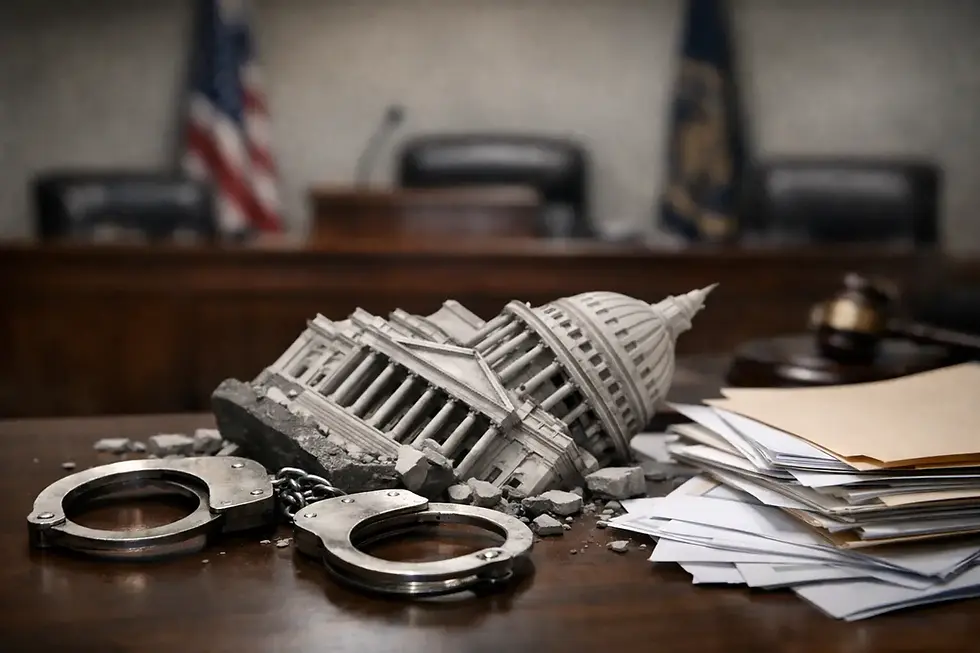
Ask people when government accountability breaks down, and many will name a scandal, a corruption case, or a cover-up. Fair enough. But the most telling examples of government accountability failures are often less cinematic. They show up when agencies ignore warning signs, when officials avoid consequences for obvious mistakes, or when the public gets answers years after the damage is done.
That is what makes accountability such a useful civic test. It is not just about catching bad actors. It is about whether institutions can admit error, explain decisions, correct course, and accept consequences when power is misused or basic duties are neglected. When that does not happen, trust erodes for reasons that go well beyond one administration or one headline.
What government accountability is supposed to do
In a functioning democracy, accountability is the mechanism that connects public power to public responsibility. Elections matter, of course, but they are only one part of the picture. Legislatures investigate, inspectors general review conduct, courts check abuses, journalists surface evidence, and citizens ask hard questions. Ideally, those layers work together.
The trouble is that accountability often fails long before a case reaches a courtroom or a committee hearing. It fails when records are hidden, when internal watchdogs lack independence, when penalties are symbolic, or when responsibility gets spread so widely that no one person can be held to account. A public apology may arrive. A resignation may even happen. Yet the deeper system that allowed the failure remains intact.
Examples of government accountability failures in practice
Flint and the cost of ignored warnings
The Flint water crisis remains one of the clearest examples of public officials failing both competence and candor. Residents complained about water color, taste, and health effects, while experts raised alarms about corrosion and lead contamination. The problem was not merely a bad technical decision. It was the refusal, over time, to treat citizen testimony and emerging evidence with urgency.
Accountability here failed in layers. Bureaucratic defensiveness slowed action. Agencies appeared more concerned with denying fault than fixing harm. Legal proceedings and public outrage eventually followed, but delayed recognition was itself part of the failure. If a system only responds after widespread injury and national embarrassment, it has not truly held itself accountable.
The Iraq intelligence failure and thin consequences
The run-up to the Iraq War exposed how high-stakes policy can move forward on weak or distorted premises with remarkably limited institutional consequence afterward. Intelligence claims about weapons of mass destruction were presented with confidence that later proved unjustified. Multiple actors shared responsibility, which made it easier for each to claim partial distance from the final result.
This is one of the hardest accountability problems in public life. When a major decision is collective, mistakes can become ownerless. Reviews may identify flawed processes, groupthink, and poor analysis, but consequences often remain abstract. Careers continue. Institutions reframe. The public is left with the impression that catastrophic error is survivable for officials in ways it is not for ordinary people.
Hurricane Katrina and the failure of preparedness
Hurricane Katrina was a natural disaster. Much of the suffering that followed was not. The response exposed failures in planning, coordination, communication, and basic governmental competence across levels of authority. Federal, state, and local agencies struggled to act quickly and coherently while vulnerable residents paid the price.
Accountability in this case was weakened by a familiar pattern: everyone could point to someone else. Emergency management is inherently complex, and that complexity is real, not an excuse. Still, complexity should increase the demand for clear responsibility, not reduce it. When disaster response systems are underprepared, fragmented, or led poorly, public accountability cannot stop at saying the event was unprecedented.
Abu Ghraib and the rank problem
Abuse at Abu Ghraib became a global symbol not only because of what happened, but because of how accountability was distributed afterward. Lower-ranking personnel faced punishment. The broader command climate, policy environment, and institutional culture received scrutiny, but many observers came away with the sense that accountability traveled downward more easily than upward.
That pattern is common in government failures. Frontline actors are more visible, more replaceable, and easier to discipline. Senior decision-makers often operate through memos, vague directives, or diffuse chains of authority that make direct responsibility harder to pin down. Yet a system that reliably punishes the bottom and protects the top sends a corrosive message about how power really works.
Veterans wait-time scandals and manipulated metrics
When veterans' health systems were found to have manipulated wait-time records, the scandal revealed an uncomfortable truth about performance management in government. Metrics are supposed to increase accountability. But when leadership ties reputation too tightly to targets without building capacity to meet them, numbers can become a stage prop instead of a monitoring tool.
This kind of failure is especially instructive because it does not always begin with personal greed or obvious malice. Sometimes it grows from pressure, fear, and institutional habits that reward good-looking reports over honest ones. That does not make it less serious. It means accountability has to examine incentives, not just rule violations.
Why examples of government accountability failures keep repeating
The recurring nature of these failures is not accidental. Governments are large, layered, and often designed to balance competing values like speed, legality, expertise, and democratic input. That complexity is necessary, but it also creates blind spots.
One recurring problem is information asymmetry. Officials know far more than the public, and sometimes more than their own supervisors. If records are incomplete, classified, delayed, or strategically framed, watchdogs and citizens are always working from behind. Another problem is institutional self-protection. Agencies do not like admitting mistakes because mistakes invite litigation, political backlash, and reputational harm.
There is also the issue of time. Public outrage is immediate. Genuine investigation is slow. By the time facts are established, attention has moved on, elections have passed, and incentives to act have weakened. That lag can turn accountability into theater. Hearings happen. Reports are issued. Reforms are announced. Then ordinary routines absorb the shock and continue much as before.
None of this means accountability is impossible. It means slogans about transparency are not enough. Systems need real consequences, independent oversight, and a culture that treats error disclosure as a duty rather than a career-ending betrayal.
What meaningful accountability actually looks like
If we want better than ritual outrage, we need a more demanding definition of success. Accountability is not satisfied by a single firing, a press conference, or a report that nobody reads six months later. It requires a chain of response.
First, the facts have to come out in a form the public can understand. Second, responsibility has to be assigned at the right level, not just the most convenient one. Third, consequences have to be proportionate and visible. Fourth, the institution has to change in a way that reduces the odds of repeat failure.
That last piece is where many systems fall short. It is possible to hold someone responsible for a bad outcome without fixing the structure that made the outcome likely. In practice, meaningful accountability often means boring reforms: clearer reporting lines, stronger whistleblower protections, better data integrity rules, more independent inspectors general, and fewer opportunities to bury evidence in procedural fog. These are not dramatic solutions, but democracies are often saved by the unglamorous stuff.
There is also an important trade-off to acknowledge. Demanding accountability cannot mean punishing every honest mistake as if it were corruption. Public officials who fear disproportionate backlash may become more secretive, less experimental, and more defensive. The goal is not a government that never errs. It is a government that responds to error honestly and does not insulate power from consequence.
Why everyday citizens should care
It is easy to hear this discussion as something for lawyers, elected officials, or policy specialists. It is not. Accountability failures shape daily life. They affect whether drinking water is safe, whether public health warnings are credible, whether veterans get care, whether disaster relief arrives, and whether major national decisions are made on sound premises.
For everyday thinkers, the task is not to become experts in every agency chart or investigative report. It is to stay alert to patterns. When officials evade clear questions, when internal reviews replace independent scrutiny, when blame settles only on the least powerful participants, that is not just frustrating optics. It is evidence of a deeper democratic problem.
A healthier civic culture does not require constant outrage. It requires memory, seriousness, and a willingness to ask whether institutions that failed once have actually earned back trust. That is harder than reacting to a scandal and easier than giving up entirely. It is also where meaningful interaction begins.
The real test of democracy is not whether mistakes happen. They will. It is whether power can be made to answer for them in time to matter.
I'm R. Simon Kent and this is My View from the Cheap Seats


Comments